

On this page
This section aligns with the following domain of the Theory of Change:
- 2.4 Community engagement with and exposure to prevention
- 2.5 Community demands action on prevention
- 3.4 Community understanding of gender-based violence
Community education and engagement are critical to whole-of-population approaches to preventing family violence, gendered violence and violence against women. These strategies aim to reach a wide audience to increase an understanding of different forms of violence, de-stigmatise the issues, and challenge the attitudes, behaviours and social norms that drive violence (190).
Social change work, such as campaigns, can build community literacy, prompt individual action and reflection, and support community mobilisation to prevent and address family and gendered violence. When designed to support mutually reinforcing and evidence-based prevention and early intervention programs, campaigns can be a powerful facilitator of social change (96, 191).
Where progress has been made
Understanding of and attitudes towards violence against women
Australia’s National Research Organisation for Women’s Safety (ANROWS) conducts the National Community Attitudes towards Violence against Women Survey (NCAS) every four years. It is a periodic and representative survey of the Australian population’s understanding of and attitudes towards violence against women and gender inequality. Each main NCAS scale corresponds to one of the four Change the story drivers of gendered violence, thereby acting as national and state proxies for progress against the national framework.
The 2021 findings were released in 2023, and Respect Victoria conducted secondary analysis of a boosted Victorian sample to allow for a more nuanced understanding of the state results (92, 136).
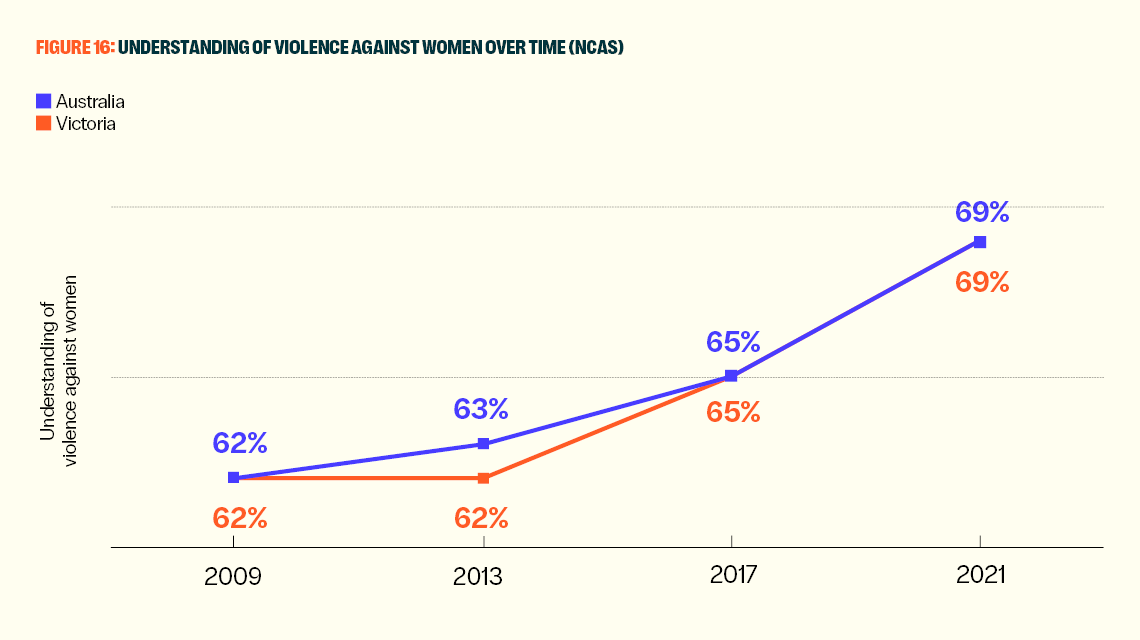
The analysis shows Victorians had a significantly higher understanding of violence against women in 2021 compared to previous years. That is, more Victorians can recognise what constitutes violence against women and domestic violence. Figure 16 shows that the mean understanding of violence against women score in Victoria has increased from 62 in 2009 to 69 in 2021.
Figure 16: NCAS comparison of Australian and Victorian understanding of violence against women over time (92)
However, concerningly, a substantial proportion of Victorian (39%) and Australian (41%) respondents thought domestic violence was perpetrated by men and women equally, contrary to Australian quantitative studies and police and court data that shows most perpetrators are men (192, 193). This indicates more work is needed to strengthen community understanding of the gendered nature and impacts of such violence.
Victorian men are also less likely to recognise forms of domestic violence that do not involve physical abuse or property damage. They displayed a lower understanding of the violence faced by people in marginalised groups, such as transgender people and people with disabilities. In other words, they were less likely to recognise violence against these groups as wrong. These findings validate the increasing policy and programmatic focus on engaging men and boys in prevention efforts.
Attitudes towards gender inequality
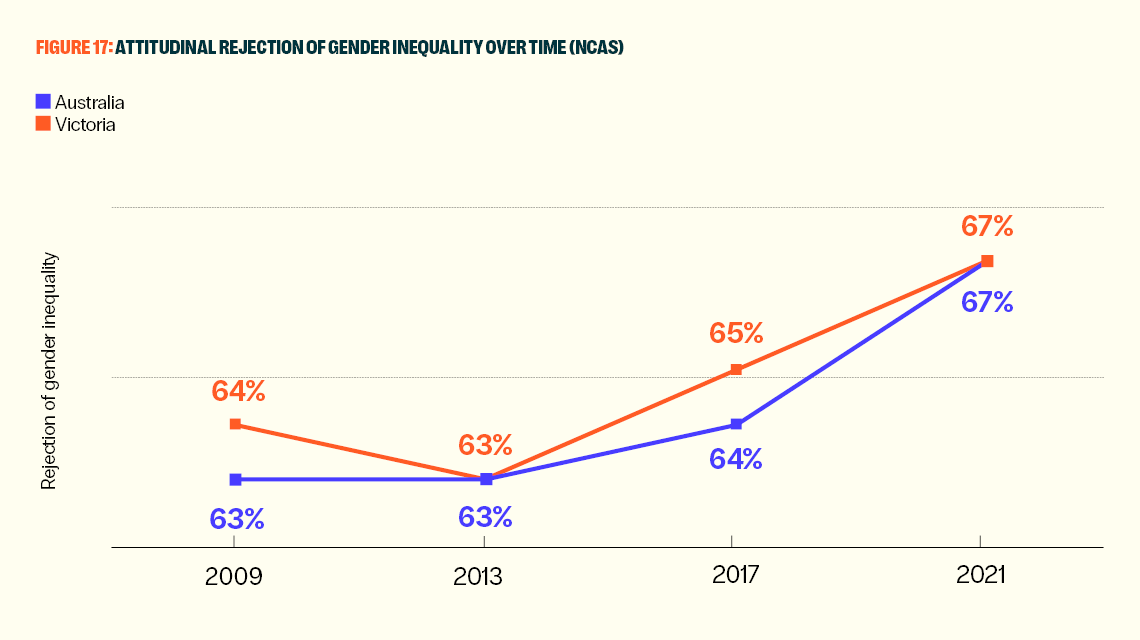
There was also a significant increase in the number of people who reject gender inequality – in other words, recognise it is wrong and support the goals of a more gender equal society. Figure 17 shows that Victorians’ mean attitudinal rejection of gender inequality score has increased from 64 in 2009 to 67 in 2021.
Figure 17: NCAS comparison of attitudinal rejection of gender equality over time (92)
Attitudes to gender inequality, understanding of violence and attitudes towards violence are interconnected. Respect Victoria’s secondary analysis validated existing understandings that denying gender inequality and upholding rigid gender roles have a strong relationship to violence-supportive attitudes.
Attitudes towards sexual violence against women
Both Victorian and Australian respondents showed a significant improvement in attitudes that reject sexual violence in 2021 compared to 2017 (meaning more Victorians and Australian recognised sexual violence was wrong). Despite this, Victorian men demonstrate higher agreement with attitudes that minimise, deny or shift blame in cases of sexual violence than Victorian women.
ANROWS reports on state- and national-level NCAS results that are averaged to produce scale scores on different dimensions. Respect Victoria’s analysis of the boosted sample found that the story beneath may be one of positive shifts alongside increased backlash. In other words, as the broader population moves towards healthier, less violence-supporting and patriarchal attitudes, a minority of men may be becoming polarised and aligning more strongly with opposing attitudes that reject gender equality (136).
Sexual violence and the belief that sexual assault accusations are weaponised against men appear to be domains where this polarisation effect is occurring in Victoria – reinforcing the need for a targeted focus on preventing sexual violence.
Attitudes towards domestic violence against women
Figure 18 shows there was no significant difference in the rejection (i.e. condemnation) of domestic violence between 2017, where the mean score was 67 and in 2021 68, but that it has changed since 2009 (92).
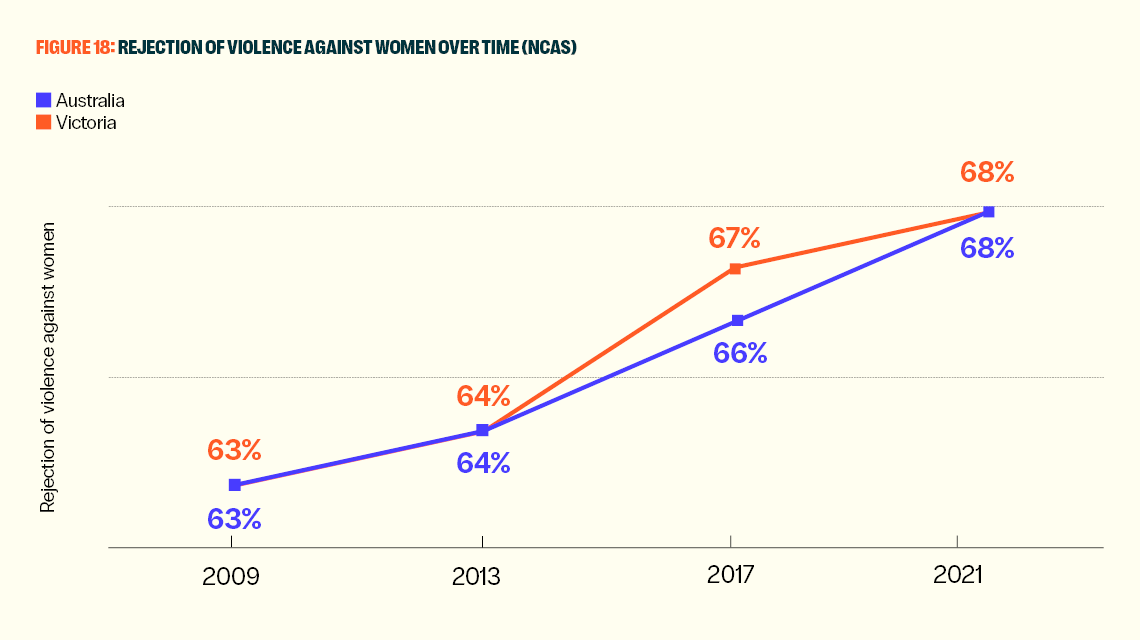
These NCAS findings indicate there is room to improve. Shifting entrenched community attitudes situated within a global sociopolitical context of intensified backlash and resistance is complex. In this context, it is commendable that prevention efforts have kept pace, with attitudes improving and/or remaining stable. Given a stable majority of Victorians (68%) reject violence against women (recognising it as unacceptable), it may be that a significant portion of the remaining 32% have more extreme or fringe views that will require more intense or tailored strategies to shift.
Community awareness of family violence and violence against women
Report participants noted they had observed that public awareness and understanding of gendered violence, family violence and violence against women had increased over the reporting period, including the harms of tech-facilitated violence and abuse, and the role of tech-facilitated abuse in coercive control.
Conversations on social media indicate a growing community awareness of sexual consent, sexual assault and stealthing, and the harm that victim-blaming causes, particularly in relation to new affirmative consent and non-fatal strangulation laws (194).
In addition, several evaluations of prevention initiatives reported positive changes in awareness, knowledge and understanding of family and gendered violence and its drivers, as well as specific topics or issues (109, 195-197). Examples include:
- harmful impacts of sexism and stereotypes in advertising
- sexual consent and affirmative consent legislation
- gender equality in sport
- preventing child sexual abuse and promoting child safety.
Increased media coverage
Media plays an important role in signalling, shaping and reinforcing social norms and attitudes about gendered violence (194, 198). Sensitive and accurate media coverage can build community awareness, catalyse community mobilisation and support systemic, attitudinal and cultural change (198, 199).
Media attention on family violence, and violence against women specifically, increased significantly over the reporting period. The monthly average of total posts and news reports increased from 27,500 to 33,500 from 2022 to 2023 (200). News coverage relating to prevention, including the impact of pornography and technology-based abuse, also increased during the reporting period (200). Increased media reporting on financial abuse and the role of technology in facilitating it have driven an increase in awareness and community advocacy on the issue, including calls for support services, reporting and policy, and law reform (194).
However, it is important to note there is distinct under-reporting of cases against First Nations women and Women of Colour in the media, and when cases are reported, reporting often condones the violence or racially stereotypes the victim (201). Research and practice knowledge have informed a better understanding of effective ways to discuss the experiences of marginalised communities, including trans and gender diverse people, and how they can be engaged better to support these conversations (202). This provides an important opportunity for the media to take a more nuanced, holistic and non-discriminatory approach in its reporting.
The shEqual initiative, led by Women’s Health Victoria and funded by the Victorian Government, called on the advertising industry to harness the power of advertising to foster a more gender-equal and inclusive society. It played a critical role in driving cultural change across the advertising industry, including developing an evidence base on sexism in advertising, raising awareness and understanding of the problem of sexist advertising, and building a movement for change (203). However, it did not receive renewed funding in 2024 and has since been wound up.
Community demand for action
Reports of marches and community activism indicate an increased community readiness and willingness to mobilise for change, particularly in the aftermath of violent attacks and murders of women.
I think where community conversation and public discourse goes now is from ‘it’s a tragedy’, when a woman is murdered, to ‘it’s not acceptable’. We need to take action. And those extra steps, I think, are absolutely palpable. – Phillip Ripper, No to Violence
Report participants indicated that they see more people speaking up and calling out harmful attitudes and behaviours than ever before. Those working in schools and other education settings are seeing more young people intercepting problematic beliefs by calling out their friends for sexist and misogynistic comments and behaviours.
Conversations on social media about bystander action have increased, with a focus on people speaking up when they see or hear abusive behaviour (194). While it is viewed as everyone’s responsibility to call out abusive behaviour, many conversations online emphasised the need for men to call out other men on sexist behaviour (194).
Respect Victoria social change campaigns
Social change campaigns using a variety of media have been a key feature supporting primary prevention programming in Victoria over the past three years. Respect Victoria has developed campaigns that engage with the Victorian community on various forms of family violence and violence against women, as well as promoting the role of active bystanders in ‘calling out’ harmful attitudes and behaviours. Respect Victoria delivered the following campaigns between 2022 and 2024:
- Respect Starts With A Conversation
- Respect Women: ‘Call It Out’
- Respect Older People: ‘Call It Out’
- Sexism and Sport: ‘Call It Out’
- Pride, Respect, Equality
- Agency, Access, Action: Women with Disabilities Victoria x Respect Victoria.
Figure 19: Proportion of the Victorian population (aged 18+ years) reached by Respect Victoria campaigns (footnote one)
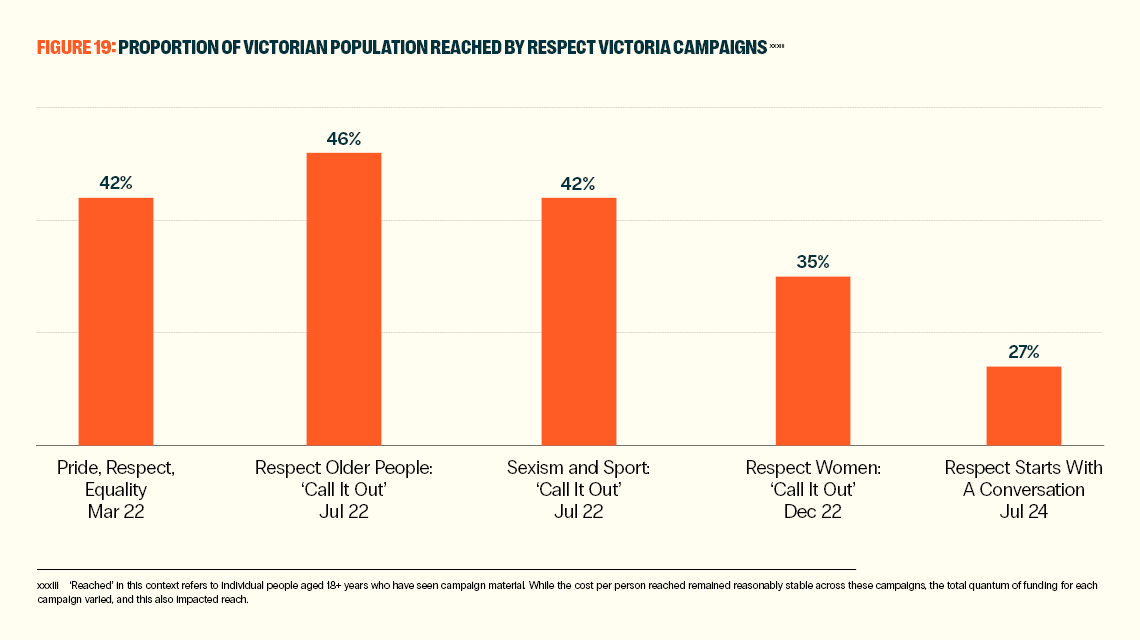
Respect Victoria conducts regular evaluations to assess actions taken by individuals after viewing campaigns. These evaluations find clear and direct connection between the campaigns and positive community outcomes and conversations (204).
Evaluation findings suggest that when campaign messaging is connected and reinforced by other prevention activity in the community, it helps people make the link between what they see on social media and behaviours around them in their daily lives (204).
16 Days of Activism
Respect Victoria supports the state’s participation in the global 16 Days of Activism against Gender-Based Violence, a yearly grassroots campaign to end violence against women and girls. 16 Days of Activism commences with the Walk Against Family Violence in the Melbourne CBD, which had its highest attendance of 8,500 people in 2024.
The 2022, 2023 and 2024 16 Days of Activism campaigns saw funds distributed by Safe and Equal, in partnership with Respect Victoria, to local councils, women’s health services, and community organisations and services. This resulted in near-statewide coverage. For example, in 2023, 75 out of 79 local councils applied for and received a grant to participate in activities for the 16 Days of Activism campaign, and in 2024, this increased to 75 local councils (205). Nearly all these funding recipients (95%) agreed that the campaign contributed to increased awareness and knowledge of the issues and/or changing attitudes to gender equality and preventing violence against women in the community (205). The evaluation also found organisations reporting less backlash and resistance (205).
Visibility of campaigns such as these in community settings has created opportunities for conversations about family violence that would not otherwise be happening (206).
And I think small things like that are just such amazing pockets of good practice that wouldn’t exist without ... the 16 Days campaign grants. – Family violence youth advocate
Where there are challenges
In the coming years, it will be critical to continue to support the design and delivery of social change campaigns that are anchored to evidence-based mutually reinforcing programs.
Strengthening engagement and communication with communities
A strong theme in this report’s consultations was the need to improve approaches to engaging and communicating with various audiences and communities about prevention, not only to the public, but also to the people and organisations who have a role in delivering prevention activities. One area emphasised was sexual violence.
There’s a lot of good stuff happening in the messaging and what we are doing, but I think it just needs to be a bit more constant and normalised in lots of different spaces, and at the same time, a bit more nuanced for people that are not getting it. – Jade Blakkarly, WIRE
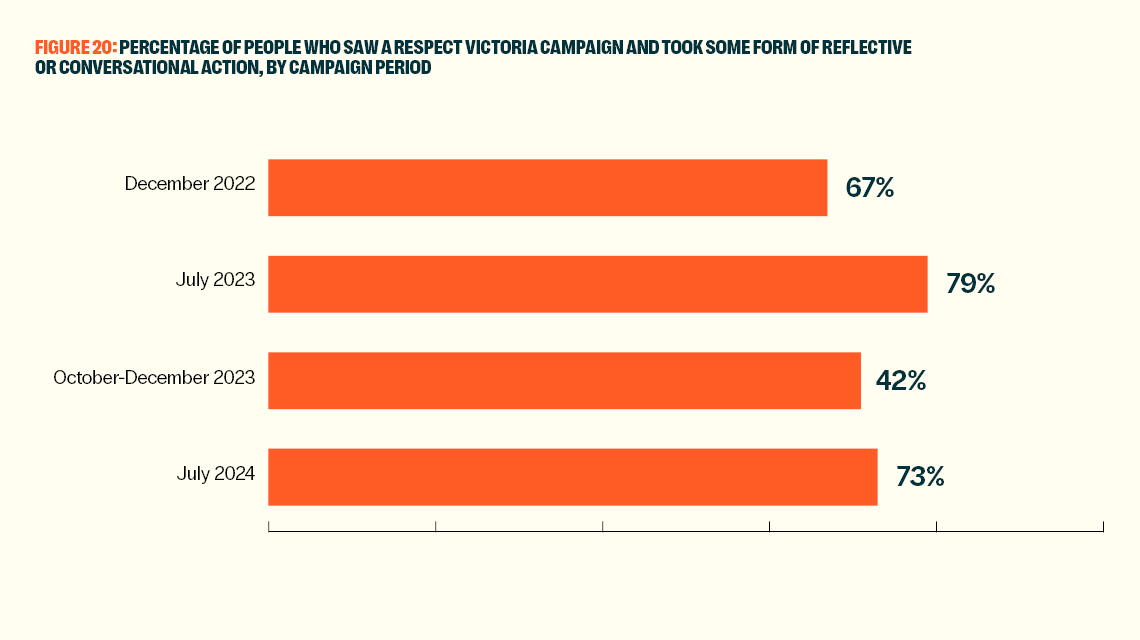
Figure 20: Percentage of people who saw a Respect Victoria campaign and took some form of reflective or conversational action (204)
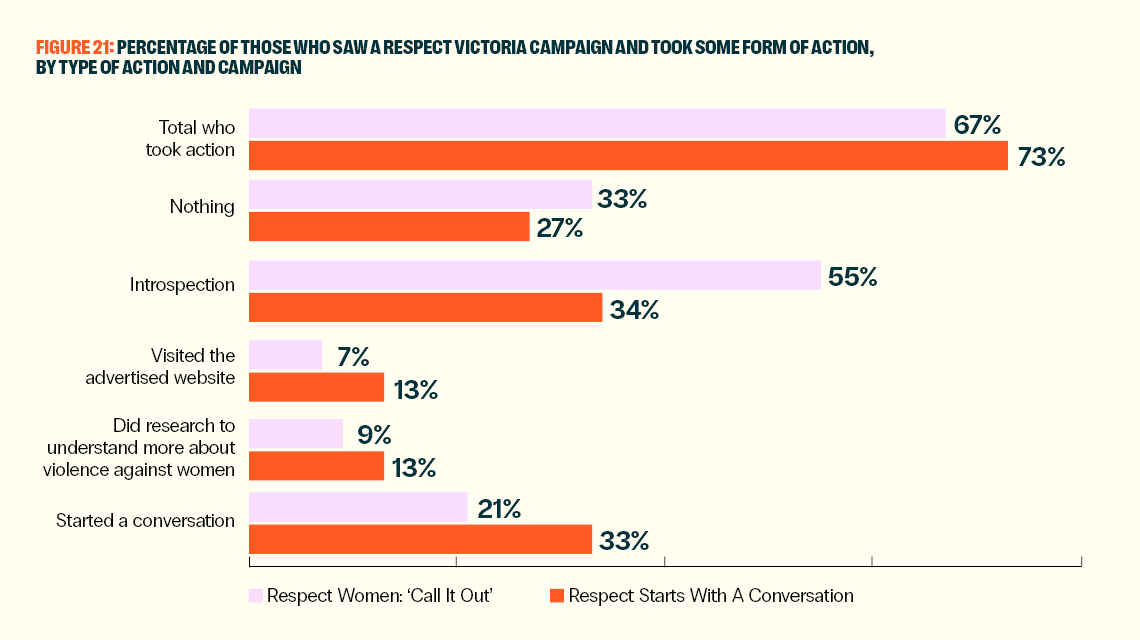
Figure 21: Types of action taken after seeing a Respect Victoria campaign (204)
Work in this area is already progressing, with values-based messaging being increasingly adopted in the sector, and several reports released over the reporting period highlighting ways to improve communication and messaging, including Safe and Equal’s 2024 national conference PreventX: Messaging for a Movement.
Family Safety Victoria commissioned a series of research projects to inform more effective messaging and communication approaches to prevent family violence, with a focus on affirmative consent, engaging parents and carers in discussions about pornography, and engaging men and boys in conversations about masculinity and gender equality (207-209). The findings of this research provide new insights on effective communication strategies and approaches that will help evolve prevention messaging.
Report participants highlighted the need to explain prevention concepts using clear language and terminology that fosters a shared understanding of what drives violence and how to prevent it, particularly in the form of concise, accessible and practical resources for communities.
Report participants also emphasised the importance of tailored messaging that respects and attends to diverse communities’ cultural ways of being and knowing, and that resonates with a broader audience.
How do we make sure that there are spaces for people from diverse communities to lead the work of messaging around prevention and primary prevention, and how do we ensure that communities own that messaging in order to make sure that it continues to reflect where communities are and what’s going to get cut through? – Domestic, Family and Sexual Violence Commissioner Micaela Cronin
Safe and Equal and the Multicultural Centre for Women’s Health have developed Communicating for Connection, a resource which draws on the existing evidence base to outline how a values-based messaging approach can be applied with multicultural and faith-based communities to strengthen prevention messaging (210).
Opportunities for action
Work with men and boys
Working with and engaging men and boys in the prevention of family violence has increasingly been acknowledged as a priority by organisations working in prevention and in the National Plan to Reduce Violence against Women and Children. However, there is a need to more clearly define what this means in practice, as it relates to changing attitudes and behaviours, promoting healthier masculinities, and engaging men and boys to take action in prevention efforts (95, 211).
Our research with young men showed we are not communicating with boys and young men well around ideas of privilege and structural and patriarchal systems. – Carolyn Wilkes, eSafety
Report participants consistently reported the importance of this work but acknowledged that, until recently, prevention approaches have faced resistance from men and boys, and that most do not see gendered violence as an issue that impacts or concerns them. This is reflected in the latest NCAS and Man Box results (92, 94).
Report participants highlighted opportunities to strengthen work with men and boys, including:
- stronger collaboration and strategic partnerships between the prevention sector and organisations and practitioners doing early intervention and other direct work with men and boys
- working in settings where there are positive role models who can influence men and boys
- strengths-based messaging and approaches that engage men in conversations about gender norms, healthy masculinities and the role they can play in ending gendered violence.
We have to work with men to end the use of violence and disrupt pathways into violence, engage men who are using violence, provide pathways out of violence – Phillip Ripper, No to Violence
Report participants raised concerns about the potential for programs and interventions targeting men and boys to cause more harm if they are not underpinned by principles of accountability and gender-transformative approaches. They emphasised the importance of these programs and interventions being designed and delivered in partnership with specialist prevention organisations, including women’s health services and LGBTIQA+ organisations. This would ensure that programs adequately engage with gender-transformative approaches, challenging the causes of gender inequality, and are not collusive – for example, where programs may minimise, blame, justify or excuse men’s use of violence and its associated impacts to create camaraderie with workshop participants (165).
Report participants referenced Respect Victoria’s Willing, capable and confident report, noting its contribution to the current evidence base on ways to engage men and boys.
[A lot of my engagement] I structure around the Willing, capable and confident report from Respect Victoria. I use that as my north star really in everything. – Anonymous report participant
The findings of the report are already informing prevention practices and approaches, including Respect Victoria’s new campaign on men and masculinities (95). The What Kind of Man Do You Want to Be? campaign invites Victorian men to engage in preventing gendered violence by encouraging them to reflect on the social pressures that can harm them and those around them.
It is essential for work on masculinities to engage with intersectionality. Community-led organisations such as Rainbow Health Australia (which hosted a forum on Challenging homophobia and engaging men and boys in 2024 that examined the connections between homophobia, gendered violence and masculinity) and The Australian Muslim Women’s Centre for Human Rights are leading the way in this work (212, 213).

Recent investment in programs and interventions targeting men and boys includes:
- $34.8 million from the Australian Government in an early intervention trial for adolescent boys who have experienced family and domestic violence, and may be using or at risk of using violence in their relationships
- investment from the Victorian Government in the expansion of the Jesuit Social Services healthier masculinities program Modelling Respect and Equality into more schools.
Given the scale of investment, there is a need to develop practice guidelines and standards to ensure quality design and delivery for all programs engaging men and boys (214) (footnote two).
Particularly relevant to this work is the need for a stronger reflection and understanding of standards of evidence when commissioning evaluation and also as part of procurement. You can only talk about efficacy if there’s actually documentation of practice. – Matt Tyler, Jesuit Social Services
Intensified focus on shifting attitudes towards sexual violence
With strong community opposition to violence against women generally, there is an opportunity to focus more intensively in the years ahead on transforming harmful attitudes towards sexual violence, which remain challenging to shift. This includes targeted and tailored programs addressing the unique drivers and reinforcing factors of sexual violence, which overlap with broader gendered drivers of violence but have some additional nuances and distinctions, including with respect to sexual violence towards LGBTIQA+ community members and children. As discussed on page 59, a statewide sexual violence strategy would be an important anchor to support coordinated, evidence-informed and impactful prevention practice in this space, as would a research focus on emerging trends and complexities concerning the role of pornography and the digital sphere in reinforcing harmful attitudes that normalise, excuse or indeed glorify sexual violence.
Social change campaigns
Social change campaigns are a critical tool for shifting the attitudes, norms and behaviours that drive family and sexual violence. They include media and online campaigns, as well as grassroots behaviour change campaigns within communities. To be effective, they must be grounded in community engagement and research and support work across the social ecology; in other words, they must reinforce work across multiple settings and levels to be most effective. Campaigns that address sexual violence – including countering the influence of violent pornography and promoting healthy, respectful relationships – are also essential.
Respect Victoria’s campaign evaluations have shown that people value both role modelling and articulation of how individuals can act to prevent violence. Continued investment in well-designed, responsive campaigns aligned with evidence-based prevention practice will strengthen public understanding of violence and its drivers, and contribute to change in cultural and social norms.
Government should support collaboration between prevention practitioners - specialist prevention sector and community-led organisations and representatives – and prevention practitioners across allied fields of health promotion, mental health, and alcohol and other drugs. This would allow them to collaboratively develop and share values-based messaging on preventing violence that resonates with and has cut-through for community, in all its diversity.
Recommendations
Respect Victoria recommends that the Victorian Government:
- Continue to support the design and delivery of sustained and responsive social change campaigns that are anchored to evidence-based mutually reinforcing programs focused on:
- promoting healthy masculinity and challenging rigid gender stereotypes that support a culture where violence can occur, particularly through programs targeting men and boys
- sexual violence, particularly the risks of violent pornography and what healthy sexual relationships should look like.
Footnotes
'Reached' in this context refers to individual people aged 18+ years who have seen campaign material. While the cost per person reached remained reasonably stable across these campaigns, the total quantum of funding for each campaign varied, and this also impacted reach. Source: (204)
Respect Victoria is responsible for developing prevention program standards under Until every Victorian is safe: Third rolling action plan to end family and sexual violence 2025 to 2027, which was released after the reporting period in September 2025.