Respect Victoria sat down with Pharrell. He wants all men – no matter their age, background or circumstances – to know that there are so many forms of masculinity and choosing the right ones for you is about showing yourself kindness and compassion.
In conversation with Pharrell
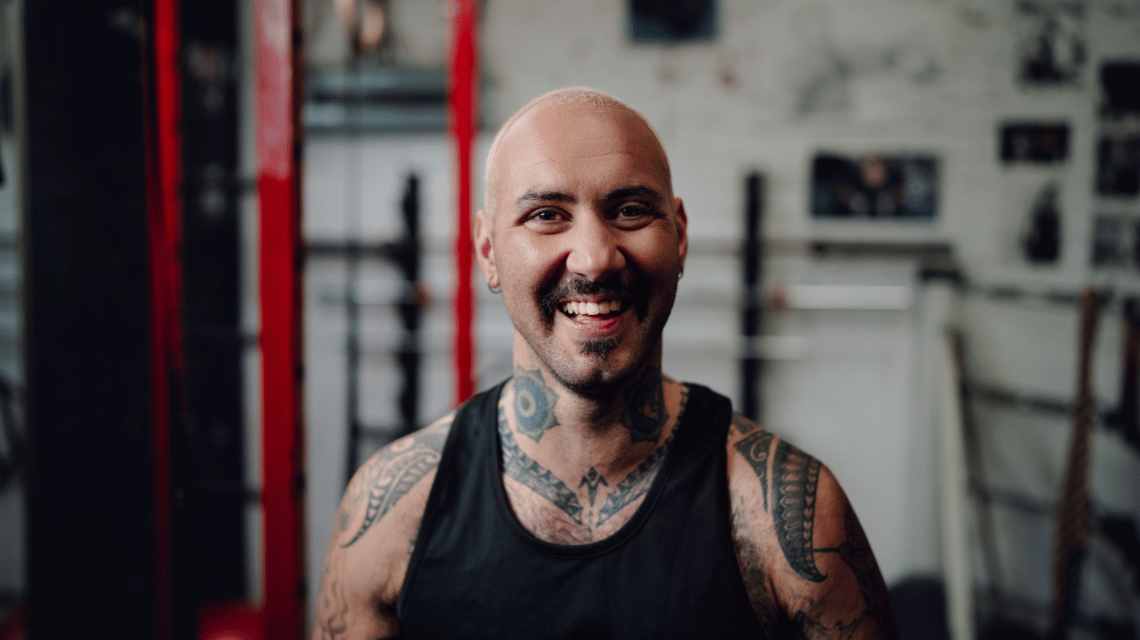
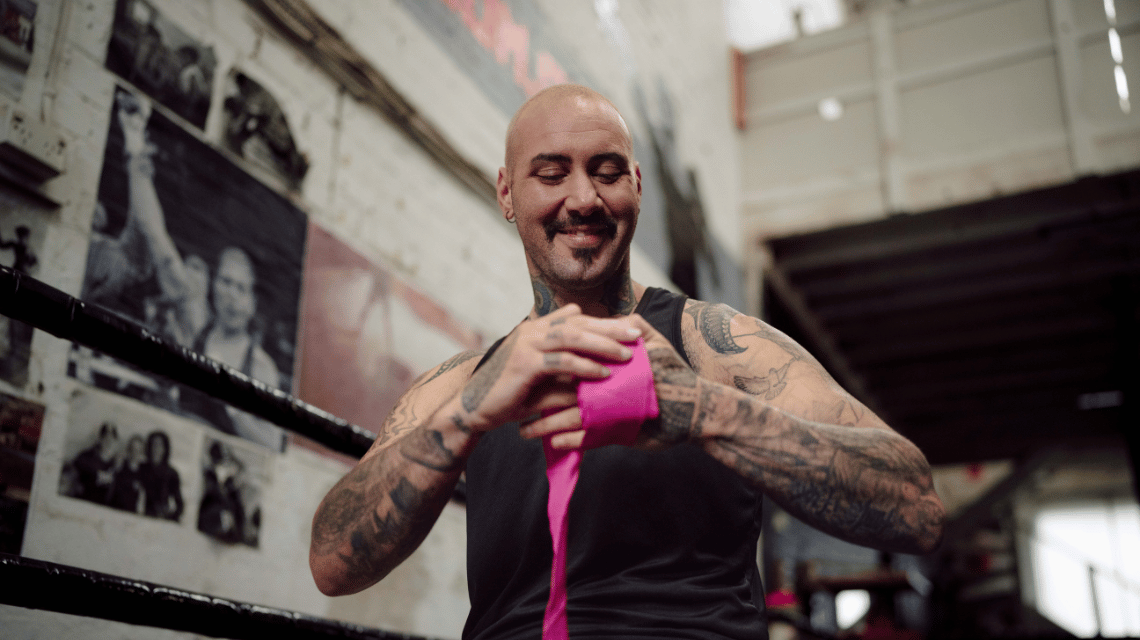
My name is Pharrell. I’m 34. I’m a certified boxing trainer and I work in the mining sector, providing emergency services across sites. I’ve been boxing for around 14 years and coaching for about 12.
What’s your personal relationship to being a man?
My personal relationship to being a man is literally becoming one. Biologically, I was born female. I transitioned very young because I always knew. For me, becoming a man has been mental, emotional and physical, and it’s been shaped by growing up around strong ideas of what a man is “supposed to be”, while also constantly being told you’re not one. That creates a fight: you’re trying to find yourself, but you’re also defending yourself, all the time.
What ideas of masculinity did you see growing up?
My dad’s side was aggressive: women as numbers, strength, physicality, ego, toxicity. It never felt right. My mum’s side was loving: family, providing, home, culture, unconditional love, but also quiet to the point of never speaking up or standing up for what’s right.
And I didn’t fully relate to either extreme. Watching both from the outside and the inside made me question the whole word. Because both were biological men, both “fit the mould,” and neither felt like the answer.
Who is the man you’ve aspired to be?
When I was younger, I thought I aspired to be someone else. But looking back, I see it differently now. The person I aspired to become… was actually me. I always looked up to myself without realising it. And I say it like this: that little girl grew up to be the man she always wanted to be.
What values do you want to hold onto as you move forward?
Being a gentleman. Not in a literal “you have to look like a man” way, but as a value. For me, “gentleman” is a gentle word. It’s about respect: treating people the way I’d like to be treated, and holding myself with care. Physically, mentally and emotionally.
What are the positive aspects of masculinity, in your view?
Strength, but not just one type of strength. Masculinity can be about mental strength, emotional capability, and physical ability. The key is “your strength is yours”. It might be sport, it might be work, it might be how you show up for others. You shouldn’t compare it because it’s individual.
You’re in boxing. What does masculinity look like in that world?
Boxing is competitive. Only one person wins, so ego can be right there. But the most beautiful part of boxing is that it isn’t really about physicality. It’s skill and technique which comes from the mental and emotional side. Anyone can put on gloves. If you want a brawl and you’ve got a good chin, you can do that, but it’s not intelligent. It’s not a smart way to conduct yourself inside or outside the ring. If someone’s stronger than you, you don’t just go punch-for-punch. You work out what you’re good at: footwork, defence, timing, strategy. Strength doesn’t define the win. It doesn’t define who you are. It’s only one tool.
What do you see in gyms? What brings men in?
Most men in a gym aren’t there to compete. They’re not there to fight. A lot of them are depressed, suicidal, mentally and emotionally not in a good place. They’re competing with someone else, trying to build a version of themselves that’s been embedded in their head. And gyms can be toxic. Not just generally, but specifically around masculinity. It becomes a cycle of comparison. But with guidance and support, people can start to understand themselves and choose what to take and what to leave.
If men didn’t have to constantly “fight” to be men, what would change?
Men’s capabilities would be unlimited. There’d be courage to do things they’ve been pushed away from. Courage to aspire to things they feel they could become. Less fear. Less emotional blockage. Because so much of “masculinity” gets defined by staying away from anything seen as feminine, and that shuts whole parts of people down.
How did you shift away from dominance and aggression?
A hard truth: for a long time, I felt being trans was the worst thing, like an unfortunate circumstance. Like you’re “never good enough,” always one under. A constant battle. But the best thing about that struggle is it forces you to look at yourself. You can’t shut it off. It’s there every day. And when you start asking: “Why do I feel this way? Who benefits from me feeling this way? What are people putting onto me?” You start to find yourself.
And I genuinely believe: if I’d been born a biological male, I probably would’ve become my father. And that’s not who I aspire to be. The struggle gave me perspective and it shaped me into someone I can actually call a gentleman.
What advice would you give other men about masculinity?
Have compassion for yourself. Ask simple questions. If something doesn’t feel right, what is it?
If someone tells you you’re not “good enough” to be a man, that’s their issue, and they’re placing it on you. No one else gets to define your masculinity. Not your mates. Not the internet. Not even family. Clothes don’t define you. Money doesn’t define you. Lifting weights doesn’t define you. If you want a partner or a family, you want to be loved for who you are, not for the person you’re betraying yourself to be. And if you have kids, ask yourself: Would I teach them the same harsh rules people are teaching me? Would I wish that on my child?
What do you notice in male-dominated spaces now?
Comparison. Competition. Ego. It’s political. It’s a numbers game. Who looks most masculine, who says the most masculine thing. And often it comes with putting others down, insults, boosting egos. It’s never-ending, and it’s not positive. That’s why it’s so important to work out who you are on the inside and be true to that.